1 hour before I purchased a flight ticket for my son Harry to come home, from America,

for Christmas 2012 in New Zealand, my very generous mother,

decided the entire family are going with her on her last overseas trip abroad.

Brother Craig chose India; his "spiritual home".

There is no place I want to go to less,

but if I want to see my sons Luke and Harry at Christmas,

I have to go.

This blog will tell the tale ...from start to finish.

Will I love India or hate it?

Showing posts with label places we will visit. Show all posts

Saturday, December 1, 2012

Places we will visit…7) Agra


Agra is the city of the Taj Mahal, in the north Indian state of Uttar Pradesh, some 200 km from Delhi.

Agra has three UNESCO World Heritage sites, the Taj Mahal and the Agra Fort in the city and Fatehpur Sikri nearby. There are also many other buildings and tombs from Agra's days of glory as the capital of the Mughal Empire.

Taj Mahal

Taj Mahal is regarded as one of the eight wonders of the world, and some Western historians have noted that its architectural beauty has never been surpassed. The Taj is the most beautiful monument built by the Mughals, the Muslim rulers of India. Taj Mahal is built entirely of white marble. Its stunning architectural beauty is beyond adequate description, particularly at dawn and sunset. The Taj seems to glow in the light of the full moon. On a foggy morning, the visitors experience the Taj as if suspended when viewed from across the Jamuna river.

Taj Mahal was built by a Muslim, Emperor Shah Jahan (died 1666 C.E.) in the memory of his dear wife and queen Mumtaz Mahal at Agra, India. It is an "elegy in marble" or some say an expression of a "dream." Taj Mahal (meaning Crown Palace) is a Mausoleum that houses the grave of queen Mumtaz Mahal at the lower chamber. The grave of Shah Jahan was added to it later. The queen’s real name was Arjumand Banu. In the tradition of the Mughals, important ladies of the royal family were given another name at their marriage or at some other significant event in their lives, and that new name was commonly used by the public. Shah Jahan's real name was Shahab-ud-din, and he was known as Prince Khurram before ascending to the throne in 1628.

Taj Mahal was constructed over a period of twenty-two years, employing twenty thousand workers. It was completed in 1648 C.E. at a cost of 32 Million Rupees. The construction documents show that its master architect was Ustad ‘Isa, the renowned Islamic architect of his time. The Taj stands on a raised, square platform (186 x 186 feet) with its four corners truncated, forming an unequal octagon. The architectural design uses the interlocking arabesque concept, in which each element stands on its own and perfectly integrates with the main structure. It uses the principles of self-replicating geometry and a symmetry of architectural elements

Agra Fort

Agra Fort,  a UNESCO World Heritage site located in Agra, Uttar Pradesh, India. It is about 2.5 km northwest of the Taj Mahal. The fort can be more accurately described as a walled city. After the First Battle of Panipat, in 1526 Mughals captured the fort and a vast treasure - which included a diamond later known as the Koh-i-Noor diamond - was seized. Babur stayed in the fort in the palace of Ibrahim and built a baoli (step well) in it. The emperor Humayun was crowned here in 1530. He was defeated in Bilgram in 1540. Sher Shah and his descendants held the fort for fifteen years. In 1555, Humanyun recaptured it for some time when the Hindu king Hem Chandra Vikramaditya defeated his army and captured the fort. Akbar defeated the Hindu King Hemu chanda finally at the Second Battle of Panipat in 1556.

Agra Fort was originally a brick fort, held by the Hindu Sikarwar Rajputs. It was mentioned for the first time in 1080 AD when a Ghaznavide force captured it. Sikandar Lodi (1488–1517) was the first Sultan of Delhi who shifted to Agra and lived in the fort.

Fatehpur Sikri

Built during the second half of the 16th century by the Emperor Akbar, Fatehpur Sikri (the City of Victory) was the capital of the Mughal Empire for only some 10 years. The complex of monuments and temples, all in a uniform architectural style, includes one of the largest mosques in India, the Jama Masjid.


Thursday, November 15, 2012

RE: can visit the St.Thomas Cathedral.

Email from the St Thomas Basilica in Chennai…

From: parishpriest@santhomechurch.com [mailto:parishpriest@santhomechurch.com]
Sent: Thursday, 15 November 2012 5:11 p.m.
To: Ann
Subject: can visit the St.Thomas Cathedral.

Hello Ann,

Sorry for delay.It is possible for you to visit the Shrine of St.Thomas Cathedral Bacilica where St.Thomas buried and you can visit St.Thomas Mount where He was killed....

Lot of prayers for you & your family.


Sunday, October 21, 2012

Details in Delhi…
PHOTOS; 1.CHOLA BATULA, 2. JALABIES,3.MAP TO BENGALI MARKET,4. JANTAR MANTAR,  5.MAP OF OLD DEHLI, 6. RED FORT, 7. LAXMI NARAYAN TEMPLE (BIRLA MANDIR), 8.MAP TO CONNAUGHT PLACE, PALIKA MARKET
Breakfast at Bengali Market
Duration: 30 minutes  Address: Babar Rd, Connaught Place
If you are staying in Connaught Place, Paharganj or Karol Bagh, take an auto rickshaw and reach Bengali Market for breakfast.
This small market has two famous joints – Bengali Sweets and Nathu Sweets. Try Delhi’s local breakfast options like chola batura, puris, lassi and sweets.
Jantar Mantar
Price: R100.00 (for a single adult)   Duration: 50 minutes   Address: Sansad Marg, Connaught Place
Built by Maharaja Jai Singh in 1724, Jantar Mantar is actually an observatory and can calculate many astronomical movements very accurately.
What to see: There are four distinct structures within Jantar Mantar in New Delhi: the Samrat Yantra, the Ram Yantra, the Jayaprakash, and the Mishra Yantras.
Hours:9am\to\dusk   Entry Fee: Rs 100
Parliament, India Gate, Rajpath, Rastrapati Bhawan (President’s House)
Price: FREE   Duration: 50 minutes   Address: Rajpath
India Gate is located at one end of Rajpath. (Raj means ‘King’ and path means ‘road’. Rajpath is the 7 km long road that connects India Gate and Rastrapati Bhawan). At one end of Rajpath is the India Gate and on the other end is the Rastrapati Bhawan. From one end, you can walk down the Rajpath towards Rastrapati Bhawan. You’ll not be permitted to enter the Rastrapati Bhawan, so you can just see the structure from outside.
Parliament House: You cannot enter premises without prior permission. So you have to see it from outside. Parliament House is the seat of power and politicians from across the country decides the fate of the nation and democracy here.
India Gate and Rajpath: India Gate is a 42-metre high stone arch of triumph. It bears the name of the 85,000 Indian Army Soldiers who died in the campaigns during the First World War.
Rajpath is the most important road of the country, it is host to the Republic Day Parade. Rajpath has India gate on one end and Rastrapati Bhawan (President’s House) on the other. This area is full of important ministries and government offices.
Rastripati Bhawan: You can see it from near but will not be allowed to enter the building. This is the official residence of the President of India and an important landmark of Lutyens Delhi.
National Museum
Price: R300.00 (for a single adult)   Duration: 1 hour   Address: Rajpath
While walking from India Gate towards the Rastripati Bhawan, you’ll find the National Museum. This has a collection of over 2,000,000 works of exquisite art, both of Indian and Foreign origin covering more than 5,000 years of India’s cultural heritage.
An hour to see the museum is not enough though you can cover several of its main sections. Some of the recommended sections are Harappan Civilization, Buddhist Art and Pre-Colombian and Western Art.
Hours: 10.00 am to 5.00 pm (Monday Closed)   Entry Fee: Rs 300 per person (which includes complete audio tour, available in English, French, German, Japanese and Hindi)
Old Delhi (Shahjahanabad), Chandni Chowk, Jama Masjid
Price: FREE   Duration: 1 hour and 30 minutes
Chandni Chowk is the heart of Old Delhi and one of the main markets of Delhi. Chandni Chowk is very crowded and congested, but will give the real essence of Delhi. Just north of Chandni Chowk, walk down the congested lanes of the City of Shahjahanabad, which was the capital of 17th century, the Mughal emperor, Shah Jahan. Today, it is one of the city’s most crowded, chaotic and captivating areas, but a great place to experience the sights, smells, and sounds of Old Delhi.
There are several market areas within Chandni Chowk. The notable markets in Chandni Chowk are:
Nai Sarak for books, stationery items and musical instruments.
Cloth Markets at Fatehpuri and the various textiles materials. Also Katra Neel, the cloth bazaar offering all kinds of fabrics such as silks, satin, crepe, cotton and muslin.
Dariba Kalan for pearl, gold and silver jewelleries. One can also buy natural perfumes or 'itra' here.
Chawri Bazaar for paper, stationary items and musical instruments.
Ballimaran for shoes and opticians.
Kinari Bazaar is the best place to find 'zari' and 'zardozi' trimmings and tinsel. Some of the shops here are over 100 years old and one can here witness skilled craftsmen at work.
Flea market (daily behind Jama Masjid) for antiques and all kinds of bargains.
Old Lajpat Rai Market electrical goods.
Cycle Market for bicycles and photography equipments.
Moti Bazar for shawls and pearls.
Khari Baoli for dry fruits, pulses, food grains, spices and saffron.
Local’s Tip: You can take a cycle rickshaws and explore Chandni Chowk and feel the stark contrast between the Old and the New Delhi. A cycle rickshaw is a non-mechanical ‘cart-like vehicle’ physically pulled by the driver and is the cheapest mode to travel around in Old Delhi. Cycle rickshaws are easily available and you can get one just outside the Metro Station. Select a market of your choice (from the above list) and ask the rickshaw puller to take you there. A ride might cost you as little as Rs 10 and maximum Rs 30.
However, remember:  * Beware of pickpocket *Beware of touts *Beware of duplicate products*And don't forget to bargain! (Start at least 25 to 30% off)  
Otherwise, take a short trip yourself though Chandni Chowk; Start from the 16th-century u Digambara Jain Temple (located at the beginning of Chandni Chowk). Next stop is the v Gauri Shankar temple of Lord Shiva. Continue to walk west until you reach the renowned wJalebiwala, a century-old sweet shop on the corner of Dariba Kalan Road. (Jalebi is the traditional and a very popular sweet in India; ‘wala’ means seller.) Walk through the market along the x DARIBA KALAN ROAD. There are shops famous for jewelleries, espically silver and traditional garments. A good place to do little shopping and collect souvenirs.Turn left from Dariba Kalan Road to enter the lane popularly known as yKinari Bazaar, a market famous for wedding paraphernalia.
Keep walking straight until you reach a slight diversion left and reach the z Svetambara Jain Temple. Come back on the Kinari Bazaar lane and walk straight until you reach { Paratha Wali Gali, a lane veering to the right, devoted to little eateries specializing in parathas (Indian-style flat bread). If you are hungry, you can try an aloo paratha, which is a traditional favourite. But don’t stuff yourself and there are better eating option ahead.Paratha Wali Gali will lead you back to Chandni Chowk. Turn right and walk until you reach the | Sunheri Masjid - an 18th-century mosque. Not far away from the mosque is the } Sisganj Gurdwara, a Sikh temple built, where you can finish your tour listening to devotional singing, which is performed here throughout the day.
You can do it partly by walking and some parts on a cycle rickshaw. And whenever you feel that you are done, take a cycle rickshaw, tell the driver the word “Jama Masjid” and head down to see the largest mosque of India. Built in 1656, this mosque as several other monuments of Old Delhi is a part of Mughal legacy.
You might not get a chance to explore deep inside the mosque but surely you can walk up the stairs and explore the fringe.
Lunch at Karim's
Price: FREE Duration: 40 minutes   Address: Matiya Mahal, Jama Masjid, Gali Kababian, Old Delhi
What to eat: Have tandoori chicken or kababs as starters, tondoori roti/ roghani nun, chicken/mutton gravy (like Lazeez Murgh Saag, Jahangiri Qorma and Akbari Murgh Masala) and lassi. 
Red Fort
Price:R250.00 (for a single adult)  Duration: 1 hour and 50 minutes   Address: Chandni Chowk, Netaji Subhash Rd, New Delhi
The Red Fort is one of the city’s famous landmarks. Mughal Emperor Shah Jahan constructed this massive fort in 1638 and work was completed in 1648. The Red Fort was the residence of the royal family. The Fort represents the zenith of Mughal creativity which prevailed during the reign of Emperor Shah Jahan, later subsequent rulers made substantial addition to its structure. The Red Fort is an attraction for tourists from around the world. You can easily spend a day here exploring the architectural genius of the palace, but an hour here can at least enable you to see the overall place and learn about the history. There are musical shows conducted here in the evenings on particular days of the week which you can see if you are in the city for a longer time and can spare an evening.  There are several monuments and gardens inside the fort and you can explore all of them in a relaxed manner.
 What to see: The ‘must see’ structures inside the Fort are Diwan-i-'Am (‘hall of pubic audience’) and Diwan-i-Khas (‘hall of private audience’). 
 Hours: 8 am to 6 pm.   Entry Fee: Rs 250 per person
Raj Ghat
Price: FREE     Duration: 20 minutes      Address: Shakti Sthal Ring Rd, New Delhi
Moving from Red Fort, the next stop would be Raj Ghat which is the memorial of the Father of the Nation - Mahatma Gandhi. One can relax here for a while letting in the serenity of the surrounding. If you are interested to know more about Mahatma Gandhi, head towards the Gandhi Memorial Museum, located next to Raj Ghat. The museum here contains mainly memorabilia of Gandhi along with a display of various photographs and artifacts presenting his life as the nation’s hero during the freedom movement. The entry to the museum is free. Check the museum website www.gandhimuseum.org for more information.
 Hours: 5.00 a.m. to 7.30 pm     Entry Fee: Free 
Laxmi Narayan Temple (Birla Mandir)
Price: FREE    Duration: 40 minutes    Address: Mandir Marg, DIZ Area, New Delhi
Located in the west of Connaught Place, this temple was built by G. D. Birla in 1938. The temple is beautifully decorated, entirely made of marbles, has beautiful gardens and is a very good place to relax for a while.
Hours: Morning till late night   Entry Fee: Free
 Connaught Place, Palika Market
Price: FREE    Duration: 2 hours and 20 minutes   Address: Palika Bazaar Radial Road Number 1, Connaught Place, New Delhi
Connaught Place is a huge market place with lots of branded outlets and food joints, pubs, etc and is the best place to spend the evening. There are numerous street shops in between as well. Explore the Inner and the Outer Circles, relax in the garden, which is in the middle or check out the underground Palika Market.
You can also walk down to Janpath Flea Market or to Government Emporiums at the Baba Kharak Singh Marg if you are in a mood for shopping. Spend as much time you want in and around Connaught Place, have dinner (there are numerous mid-ranged, budget restaurants of all flavors ranging from Indian, Chinese, Asian, continental etc in CP) and walk back to the hotel.
 Dinner Recommendation: After exploring Connaught Place, you can go to Rodeo (A Block, 12 Inner Circle, Connaught Place, Ph: 23713780, 23713781) for a drink and Mexican dinner.
 However, if you again want to try out Indian flavours, I would recommend you to go to Veda, located in H27, Outer Circle, Connaught Place. Try out various Mughlai dishes and north Indian cuisines.
Details in Mumbai…
PHOTOS 1.MAP OF AREA, 2.ELEPHANT CAVES, 3.THE TAJ MAHAL PALACE, 4.COLABA STALLS, 5. BADEMIYA OPEN AIR FOOD STALL
Elephanta Caves (UNESCO World Heritage Site)
Price: R250.00 (for a single adult) Duration: 3 hours and 30 minutes Address: Ferry ride from the Gateway of India located at Apollo Bunder, Colaba (Closed on Mondays)
Elephanta Caves is located about an hour ferry ride away from the Gateway of India, at Apollo Bunder, Colaba.The first ferry ride is at 9am, from the Gateway of India. Try to arrive at the Gateway of India to buy ferry tickets for the ride about 30 mins before the ferry ride, as it can be crowded, especially on weekend mornings, and on public holidays. The ferry operators are located at booths at the entrance to the Gateway of India. (Note: there is no preference on whichever ferry operator you choose out of the 2 operators there, as the boats they have are about the same, and tickets are priced competitively.)Ferry tickets are priced at about Rs 150, but depends on the class and category of ferry that you choose. For more comfortable seating (and less crowded areas), I will recommend taking the Deluxe categories than the economy categories, if you can afford it. Pricing difference between the categories are about Rs 50.Note: The ferry tickets are for round trips, to the Elephanta Island and back.It will be good to take the first boat at 9am to Elephanta Caves, as this will provide you ample time to spend there on the Elephanta Island, and then take the first few boats back to the Gateway of India (the first boat leaves Elephanta Island at about 12 noon or 12.30pm, depending on the ticket sales in the morning), giving you more time to explore the area in the afternoon. Local's Tip: On the way to the Elephanta Island, make sure to look back in the direction of the Gateway of India, as that will make a good angle for a picture.On arrival at Elephanta Island, note that there will be many locals waiting at the docks to ask for guide services on the island. If you are interested, do remember to bargain on the prices first, but they are generally not cheap to begin with. It will be ok to explore the island by yourself even without the guides.There are numerous caves, stone statues and wall carvings to be covered on the island, which makes it a UNESCO World Heritage Site. To get to the caves, it will be a short walk up the hill on foot (or you can bargain with and pay locals to carry you up the hill while sitting on chairs), and there is an additional charge of Rs 250 to enter the caves. It will be an experience to go into the caves as that's the main attraction on Elephanta Island.Local's Tip: Look out for the monkeys in the area, but they are generally harmless to tourists if you do not provoke them.If you have time left exploring the island before the first ferry is scheduled to bring you back to the Gateway of India, you can catch the mini train on the island that takes you around.
Gateway of India
Price: FREE   Duration: 30 minutes  Address: Apollo Bunder, Colaba
When arriving back from Elephanta Island back to the Gateway of India, this is a good time for a photo taking session, with the Gateway of India and the Taj Mahal Palace (see directions as shown in the map at the end of day 1).Note: Photo time is suggested now and not in the morning, to use the time in the morning for ferry tickets queuing, and not getting carried away for photos of the Gateway of India.
This is also an ideal time for people watching. Just take note that there will be locals walking around with their cameras and trying to sell you pictures you can pose with the Gateway. If you are interested, bargain for the price before you go for it, and beware that some may be pricey. There are also hawkers around the borders of the Gateway, selling a mix of everything from toys and decorations to street food. Take time to walk around, but unless you are really interested, do not offend them by picking on their items and eventually
Lunch
Price: R800.00 (for a single adult)   Duration: 1 hour  Address: Le Pain Quotidien, Dhanraj Mahal, C.S.M. Road, Apollo Bunder Colaba
This Belgium-style restaurant is within 200m walking distance from the entrance/exit of the Gateway of India, and is relatively easy to find (directions as shown in the map at the end of day 1). It uses organic ingredients from the local farmers for preparation of the food that you eat.It opens from early morning at 8am to late in the night at 11.30pm. If you are early, you can try the breakfast menu. For lunch, try their Tartines and Lemon Tarts (for dessert). Also see their boards in the restaurant for weekly special items (from starters to desserts and drinks) which are not on the main menu. A proper meal of starters/soup with main course and drinks should cost between Rs 800 to Rs 1300, depending on your orders. If you like what you ate, you can purchase the sauces, jams etc from the shop in pre-packed bottles!If you're looking for other choices for lunch, there are a few other restaurants (Indian, Mediterranean, French) along the same road, or opposite Le Pain Quotidien.  If you can afford the budget, you can try the many famous restaurants in the Taj Mahal Palace eg. the Japanese, Indian, Chinese, Mediterranean cuisines are definitely world-class standards.
Taj Mahal Palace
Price: FREE Duration: 30 minutes  Address: Apollo Bunder
Taj Mahal Palace
Take a stroll to the nearby Taj Mahal Palace, and take time to marvel at the architecture and interior of the hotel. 
Note: To go into the hotel, you will have to pass through some security and bag checks. Security has tightened since the bombing incidents in 2008. As the locals may say, the heightened security makes the place (and generally Mumbai as a whole) safer than compared to before the bombing incidents.The hotel has different wings - a tower wing and a palace wing. You can access all the areas, except to the rooms, which requires a key card, and is only accessible to in-house guests. There is a long stretch of shopping arcade at the palace wing as well.
Colaba shops
Price: FREE Duration: 2 hours and 30 minutes  Address: Colaba
Take your time to mingle with the locals and stroll along the Colaba area (see directions as shown in the map at the end of day 1, at the marked start of the Colaba street stalls, and walk along the Colaba Causeway), where you will find a wide variety of tiny shops selling both local and international items eg. shawls, books, shoes, sports apparels, fashion accessories etc.
These street shops come alive from the afternoon to late in the night, especially on weekends, and you will find yourself shopping while chatting with the friendly local store owners, as well as their customers. Do take time to experience this for yourself and immerse in the shopping culture of the locals.Also remember to bargain for the items that you want to purchase. A general guide would be around 20% to 30% of the price you are offerred. However, bargaining depends on items too. Eg. for books, margins are generally low, and a good bargain of 5% should close the deal.Note: Most shop assistants and owners can speak English.
Dinner
Price: $500.00 (for a single adult) Duration: 1 hour  Address: Bademiya, located in the streets behind the Taj Mahal Palace
Bademiya
This local open-air food stall opens daily in the late afternoon at about 5pm, and goes into the wee hours of the morning.Note: If you have a craving for supper, this is one recommended place to visit. If you visit at 2am to 4am in the morning, chances are, you may even spot some Bollywood actors and actresses having supper amidst the crowd.The food stall offers many open-air seats serving local Indian food, at reasonable prices, as you will be able to tell from the crowd (which is almost 90% local). A meal costs about Rs 400 to Rs 600 for a single person. The stalls serve naan, curries, kebabs, etc. A recommended speciality will be the chicken leg (ie. chicken thigh). Get a seat and ask for an English menu where you can order from. Otherwise, go to the cooking area at the food stall, and literally take a look at "what's cooking" to start your orders.
Note: Try to be there early, as the queue and wait for food gets long at dinner times between 7.30pm and 10pm. (Locals usually eat dinner at later timings.) Also an interesting fact to observe, many locals will drive to the food stall and sit in their cars to have dinner after placing orders, to avoid having to queue for tables. Otherwise, they may choose to get out of their cars, and use the car boot as a "table" for the food, while standing around the car boot to eat.The hygiene standards of this local food stall is well-rated, and there are many non-locals who eat there too. However, if you have a weak stomach, you might want to stay clear of the street food especially during the monsoon season (June to September) where the streets are not as clean as the other months of the year.
If you are not comfortable with this street stall, other choices available for food includes the restaurants along the Le Pain Quotidien (earlier described). Otherwise, you can see below for more drink and food options.
Drinks (Optional)
Price: $500.00 (for a single adult)  Duration: 1 hour   Address: Option 1: Leopold Cafe, Opposite Colaba Police Station, SB Sing Road. OR Option 2: Cafe Mondegar, Mahakavi Bhushan Rd, Apollo Bandar
There are 2 famous pubs and cafes for drinks in the area, within walking distance from the Bademiya restaurant (about 300m away). 
Option 1: Leopold Cafe
This is the famous cafe that was attacked by the terrorists in the 2008 bombings. Since the terrorist incident happened, security has been stepped up, and there is a guard at the door to check bags before you enter the cafe. However, this is frequently patronised by many locals, and is generally considered to be safe. The cafe serves alcoholic and non-alcoholic drinks, snacks, as well as proper meals to fill your stomach.
Sit in to experience the bustling crowd drink and eat while chatting away after a day's work, with some background music.Note: If you are observant enough, you will be able to spot a few bullet holes in the walls of the cafe, which were left there as they were since the 2008 incident. Note: This cafe is non- airconditioned.
Option 2: Cafe Mondegar
This cafe offers a different genre of music compared to Leopold Cafe, which caters to a slightly younger crowd. You can also opt to put a coin in the juke box at the corner of the cafe to choose your own songs.
Cafe Mondegar serves similar food and drinks as compared to Leopold Cafe, and at roughly the same range of prices.Note: This cafe is airconditioned, compared to Leopold Cafe.
http://www.unanchor.com/itinerary/view/194#

Saturday, October 20, 2012

Places we will visit…6) Dehli
PHOTOS 1. New Dehli Temple, 2-3.Tibetan Market 4-6 Jan Path Market, 7. Sarojini Market, 8.Red Fort, 9. Humayun’s Tomb, 10. Chattapur Temple, 11. Kinari Bazaar Old Dehli, 12-13. Tibetan Market 14. Dehli Golf Club
NOTE Check out Dehli Golf Club!!!!!  Harry, Luke, Mickey, Stew, Blair and Craig SHALL compete!! R/s1500 green fees.  Only about $30 - sooooo cheap!  Bring covered shoes and long pants!  Ladies - go shopping!Craig
Janpath Market: – The Janpath market was once known as the Queen’s road and still embraces the colonial charm amidst its décor and disposition. The shopping core is a heaven for lovers of Indian stuffs like handicrafts, colorful-trendy fashion including artificial jewelries and clothes. The market also provides winter wears, woolen clothes, and fashionable wears for affordable prices.
Note: – Janpath Market is closed on Sunday. To get the best deal one must be a bargain hunter.
Tibetan Market: – Tibetan Market in Delhi is also famed as Monastery market. The place is favorites amongst Delhi University Students for shopping cheap, non – branded yet trendy clothes, lather products, foot wear, and bargain hard to get the best price.
Note: - Tibetan Market is situated near Inter State Bus Terminal and is open on Sunday.
Sarojini Nagar Market: – It is one of the favorite shopping hubs of natives in Delhi and also foreigners must visit it ones in this lifetime. The shopping paradise is famous for home decoration accessories, clothes and leather stuffs and travel bags.  The products are however not branded and locale made. But you will get the best trend, brand replicas, and fashion updates.
Note: – Sarojini Market is open on Sunday and the prices vary from shop to shop. Be a good bargainer to get the best discounted deals.
Places we will visit…5)Udaipur
PHOTOS Taj Lake Palace udaipur
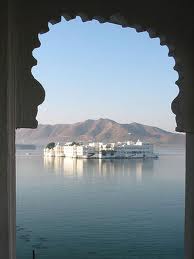
Lake Pichola has two islands, Jag Niwas and the Jag Mandir. This lake is 4 km long and 3 km wide, originally built by Maharana Udai Singh II. There are many ghats, like the bathing and washing ghats, which can be approached through boats from the City Palace of Udaipur (Bansi Ghat). In the heart of the lake the Lake Palace stands, which is now converted into a heritage palace hotel. The lake remains fairly shallow even during heavy rains, and gets dry easily in times of severe drought.
Founded by the legendary Maharana Udai Singh in 1559 A.D. on the banks of Lake Pichola, Udaipur is one of the most romantic cities in Rajasthan. Also known as the city of lakes, Udaipur gleams in its abundance of lakes, marble palaces and picturesque gardens.
A legendary Haveli standing on a peaceful island "Bramhapuri" on the western Banks of Pichola Lake, Overlooking the magnificent city palace. The oldest jagdish Temple ,Bathing Ghats and Embankments. West Zone culture Center of India which happens to be historical Bagore ki haveli is also situated on the opposite ghat. Can we visit for a drink…the Taj Lake Palace Udaipur 


Places we will visit…4) Mumbai
PHOTOS Juju Beach, Juju Beach, Mumbai, Indian Town Mubai.
We’ll be staying near Juhu Beach is one of the most famous beaches in Mumbai. Many tourists make it a point to visit the beach when they come to Mumbai, as it is a relatively uncrowded free space in the city, although it does get crowded in the evenings and weekends. Juhu is a suburban neighbourhood of West Mumbai. It is famous for its sprawling beach Juhu Beach. It is surrounded by Arabian Sea in the west, Versova in the North, Santacruz and Vile Parle in the east and Khar to the South. Juhu is one of the most affluent areas of Mumbai and many Bollywood celebrities live here too.It is famous for its Mumbai street food, notably bhelpuri, pani puri, chaats, and of course pav bhaji. The food stands are relatively hygienic. Italian food is also very popular in Juhu with many restaurants like Little Italy, Penne, Don Giovanni, Mangi Ferra. On the southern end of Juhu beach there are many luxury hotels and apartments. Juhu beach is also a very popular place for watching aircraft as planes from Chhatrapati Shivaji International Airport usually takeoff directly over the beach towards the sea. At the north end of Juhu Beach there is a place called Gandhi Gram. During the summer vacations, children often go and play games such as cricket, football, basketball at the Juhu Beach. 
Places we will visit…3) Goa
PHOTOS 1. Goa beaches. 2. Goa Beaches. 3. Map of Goa. 4.Casket of St Francis Xavier. 5.Basilica of Born Jesus 7. Our Lady of the Mount Chapel, Velha. 8. The Roayal Chapel of St Anthony. 9.Church of our Lady of France between Panaji and Velha. 10. Church and Convent of St Monica. 11. Church of St Monica 12.Panaji church of Immaculate Conception
Goa's history goes back to 20,000–30,000 years. The rock art engravings exhibit earliest traces of human life in India. The state of Goa is famous for its excellent beaches, churches, and temples. The Bom Jesus Cathedral, Fort Aguada.
GOA HAS TWO WORLD HERITAGE SITES: the Bom Jesus Basilica and churches and convents of Old Goa..The Basilica holds the mortal remains of St. Francis Xavier, regarded by many Catholics as the patron saint of Goa (the patron of the Archdiocese of Goa is actually the Blessed Joseph Vaz). The relics are taken down for veneration and for public viewing, as per the prerogative of the Church in Goa. The last exposition was held in 2004.
SANCTUARY OF BLESSED JOSEPH VAZ in Sancoale, Pilar monastery which holds novenas of Venerable Padre Agnelo Gustavo de Souza from November 10 to 20 November yearly.
MARIAN APPARITION at the Church of Saints Simon and Jude at Batim Ganxim, near Pilar, where a number of Goans and non resident Goans visit.
STATUE OF THE BLEEDING JESUS on the Crucifix at the Santa Monica Convent in Velha Goa. There are a number of churches , like the Baroque styled Nixkollounk Gorb-Sombhov Saibinnich Igorz (Church of the Our Lady of Immaculate Conception) in Panjim, the Gothic styled Mater Dei (Dêv Matechi Igorz/ Mother of God Church in Saligao and each church having its own style and heritage, besides Kopelam/ Irmidi (Chapels).